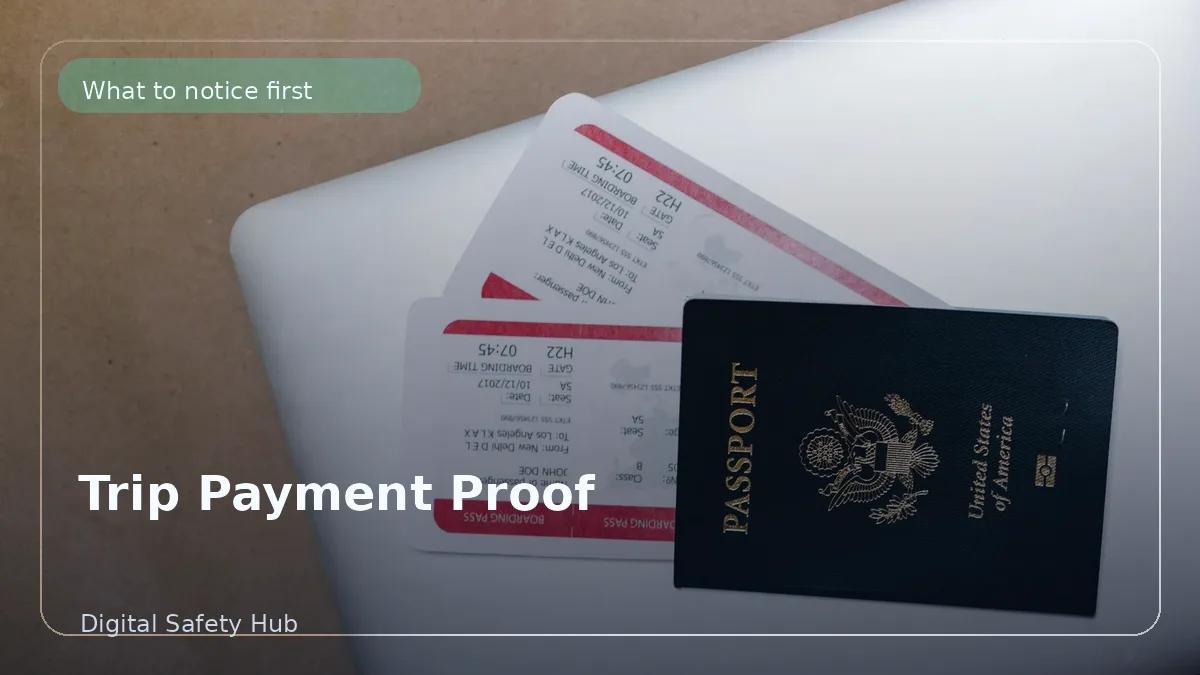
The reader’s safety brief
- Before travel, store proof in one folder so refund and check-in issues are easier.
- Every booking should have amount, date, booking ID, and official confirmation saved.
- For group trips, separate personal transfers from vendor payments.
Travel payments become messy because tickets, hotel advances, cab bookings, food payments, and group shares happen across many apps. A simple proof system helps when a booking fails, a refund is delayed, or a friend asks for account details.
What usually goes wrong during trip planning
One person pays the hotel advance, another books train tickets, someone else collects money through UPI, and screenshots get buried in chat. Later, nobody remembers which payment belongs to which booking.
The safer method is to create a trip folder before paying. Store every receipt with the booking name, amount, and date so you are not searching under pressure at the hotel counter or during refund follow-up.
Proof checklist for each booking
Group trips create confusion when many people pay at different times. Keep payment proof, booking IDs, passenger names, and refund notes in one shared but private place.
- Save booking confirmation email/SMS and screenshot of the final app page.
- Save UPI/card transaction ID, amount, date, and merchant name.
- For group payments, write who paid, who owes, and what the payment covers.
- Keep cancellation and refund rules before making non-refundable payments.
- Do not pay travel agents through personal UPI IDs without a written invoice or proof.
A group trip payment mix-up
Example: For a group Ooty trip, keep one folder named “Ooty May 2026” with train tickets, hotel booking, advance receipt, cab quote, and each friend’s UPI transfer. This prevents confusion if one booking is cancelled.
Safer action before the trip starts
Do the proof work before leaving home. During travel, network, time pressure, and group confusion make it harder to collect missing details.
A folder with receipts, booking IDs, and payment references helps at hotel counters, ticket checks, and refund calls.
- Name the folder by place and month.
- Store booking rules before payment.
- Separate friend transfers from vendor advances.
Trip payment records to arrange
For group travel, keep each person’s payment screenshot, ticket ID, hotel booking ID, refund status, expense split, and final balance. This prevents blame later.
- Booking ID, PNR or hotel confirmation number.
- Payment receipt from bank/UPI/card app.
- Cancellation policy screenshot taken before payment.
Habits that reduce safety
- Only saving WhatsApp screenshots and not official booking receipts.
- Sending group money to an unknown agent without invoice.
- Mixing personal payments and vendor advances in one chat thread.
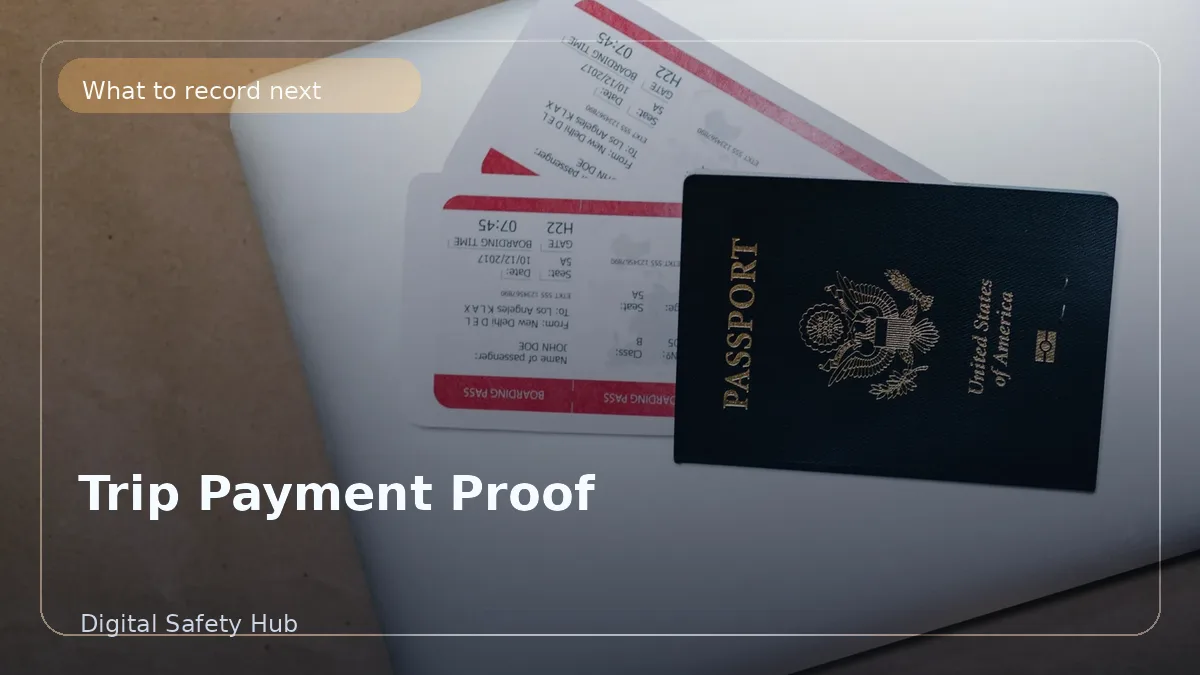
Keeping group trip payments clear
Trip payments become confusing because money moves in many directions: hotel advance, bus tickets, train tickets, cab bookings, fuel share, food advance, entry tickets, and refunds. If proof stays scattered across WhatsApp, gallery, email, and payment apps, it becomes difficult to settle accounts later. A simple folder and sheet can prevent most arguments.
For every payment, save the date, amount, payer, receiver, booking ID, and purpose. Use clear file names instead of random screenshots. For example: “hotel-advance-ooty-may-12,” “bus-ticket-coimbatore-chennai,” or “cab-refund-request.” If one person pays for the group, share the receipt immediately and note who has repaid. Do not wait until the end of the trip to reconstruct everything.
Refunds need special attention. A cancelled hotel or failed ticket payment may take days. Keep the original payment proof, cancellation confirmation, and refund reference together. If a support person contacts you unexpectedly, verify through the official app before sharing any details. A real refund record helps you avoid both confusion and fake refund calls.
How to record and report
- Create one folder for tickets, hotel receipts, cab proof, and refund screenshots.
- Maintain a simple shared payment sheet for group expenses.
- Name screenshots clearly so they are easy to find later.
- Keep refund references until money reaches the account.
- Avoid sharing sensitive payment screenshots in public groups.
Keep proof until the trip is fully closed
Do not delete payment screenshots immediately after the trip ends. Refunds, deposit returns, room damage claims, fuel sharing, or missed reimbursements can appear later. Keep the folder for at least a few weeks after every expense is settled. If you travel often, create one folder per trip with the city and date. Clean it later only after confirming there are no open refunds or disputes.
Before the group trip starts
Make one shared record of who paid, what was booked, and what is refundable. Group travel becomes stressful when proof is scattered across chats. A clear sheet or note prevents arguments later.
For group expenses, one person should not hold all proof privately. Share a read-only summary with the group: booking IDs, paid amounts, refund status, and balance due. This keeps everyone informed without exposing sensitive payment screenshots or full bank details in a busy chat.
For trip payment proof organization for tickets, hotels, and group expenses, the safer choice is the one you can explain, verify, and prove later without depending only on a stranger’s message.
Close the trip account after returning
After the trip, update the final expense sheet, refunds, cancellations, and pending balances. Many group arguments happen weeks later because nobody closed the records properly. Keep the final summary simple: total paid, total spent, refund received, and balance to collect or return. Then archive the proof in one folder.
Use names clearly in group payments
When collecting money from a group, record who paid, who is pending, and what each payment covers. Avoid vague notes like “trip amount” when many bookings are happening. Clear naming prevents later confusion about whether a payment was for room, cab, food, or ticket.
Where to confirm bookings and refunds
Confirm trip records through the original booking platforms, IRCTC where applicable, hotel pages, and payment-app history. Avoid relying only on screenshots forwarded in a group.
Official pages to bookmark
This guide is for general awareness and safer decision-making. It is not legal, banking, travel, or financial advice. For disputes, money loss, account recovery, or official complaints, follow the process given by the concerned bank, platform, business, or government department.
Frequently asked questions
Is a WhatsApp confirmation enough for travel booking?
Not by itself. Keep the official app/website confirmation or written invoice too.
Should I save cancellation rules?
Yes. Screenshot them before payment because refund disputes often depend on those rules.
How do I manage group expenses safely?
Use a clear sheet or note with payer, amount, purpose, date, and proof link/photo.